
Cats vs. Birds
What's more worth it and what should we keep and help? (Birds, obviously)

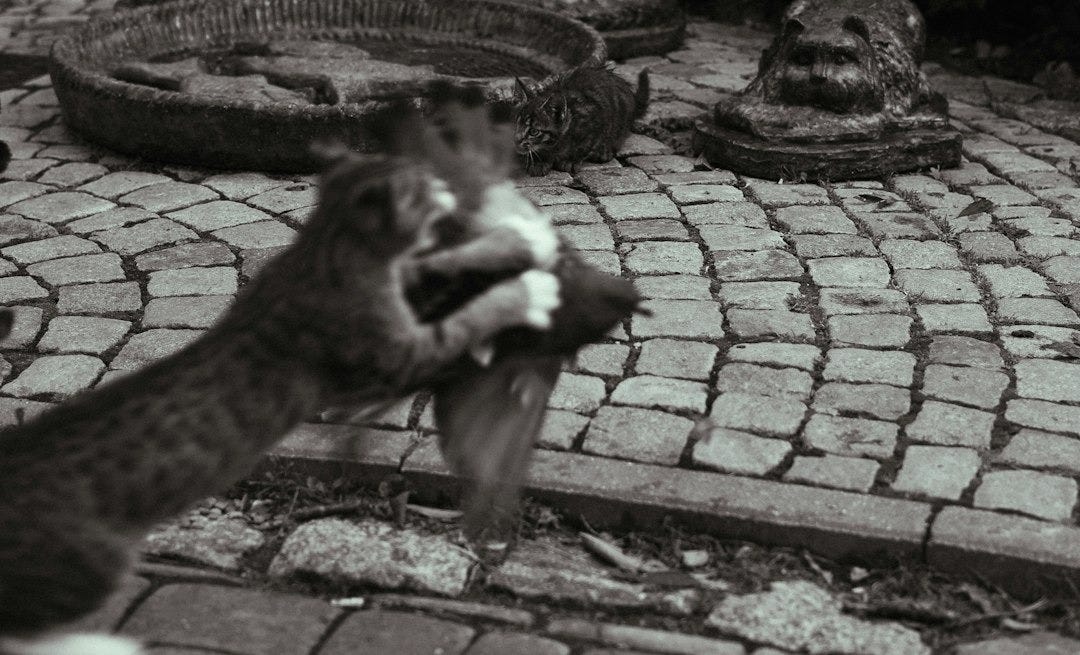
The sight of a bird feeder in a garden is a little beacon of life, attracting all manner of fascinating species. It’s the perfect setup for birdwatchers, a small gift to our avian neighbours in the hope of seeing the flash of a greenfinch or hearing the trill of a wren. But then, lurking at the edges, comes the cat: tail twitching, eyes locked, and paws poised. To my mind, few sights are more frustrating than watching these hunters set up shop near a feeder—one meant to draw birds in, not lure them to their deaths.
The trouble with cats is that they’re superb hunters, by design and instinct. Domestic cats have no place in the natural landscape, not in the UK nor in many other regions. They are, quite simply, a disruptive force in ecosystems, responsible for millions of bird deaths each year. Some estimates suggest that UK cats alone kill upwards of 27 million birds annually—a staggering number when you consider that many of these species, especially songbirds, are already struggling under the weight of habitat loss, pollution, and climate change. To have cats freely picking off our feathered friends right in our backyards adds a preventable injury to an already beleaguered population.
But here’s where I get particularly agacé, as the French say: people know this. It isn’t some well-kept secret that cats kill birds. The evidence is overwhelming, and yet countless birdwatchers and pet owners alike are still choosing to ignore it, keeping bird feeders in full access of their roaming cats. Perhaps it’s out of sheer denial, but to my mind, it’s more wicked than that. It’s one thing to enjoy watching birds from your window, but another thing entirely to turn your garden into a hunting ground simply by allowing a predator free access to it. There’s no gentler way to say it—this is negligent at best and downright cruel at worst.
Some might argue that “it’s just the natural way” for cats to hunt. But let’s be clear: domestic cats are not natural predators in these environments. They are, by their very existence here, invasive. They hunt not out of hunger but out of sheer instinct, killing creatures they don’t even consume. And birds are only one casualty. Cats are known to decimate entire populations of small mammals, amphibians, and insects. Studies from conservation agencies show that native predators in an area cannot possibly balance out the havoc cats wreak on local wildlife, especially as cat populations continue to grow.
Allowing cats access to bird feeders only exacerbates this destruction, transforming what should be a safe haven into a danger zone. Feeders are supposed to be a supportive tool, particularly valuable in winter when food sources are scarce. They offer birds a reliable spot to gather nourishment, especially when weather conditions can be harsh. But all this effort is pointless if a cat can sit nearby, waiting to pounce. Many people may not see the end result—a pile of feathers in the garden, or worse, a mauled bird. But as a birder who loves these creatures, seeing them lured to a death trap makes my blood boil. It’s unethical, and if I’m being honest, it’s irresponsible to pretend otherwise.
If people insist on having cats and bird feeders simultaneously, the least they can do is make an honest attempt to prevent this kind of senseless carnage. Some will suggest bell collars, which studies have shown can indeed help, though they’re far from perfect. Birds are crafty and alert creatures, but cats are just as relentless. And even with bells, many birds won’t stand a chance if the feeder’s low to the ground or near a convenient hiding spot. Yet, people continually place feeders where their cats can easily ambush, treating it as if it’s no more than a mild inconvenience. I don’t see how any bird lover could knowingly place such a tempting danger before their feathered visitors.
For bird populations, the consequences of our laxity with outdoor cats are devastating. Take the house sparrow, for instance—a once-common bird now in steep decline. Or the song thrush, struggling against similar odds. Many of these species already face a host of challenges we can’t control, but this one—the constant threat of the neighbourhood cat—is entirely within our power to prevent.
In the end, we have a responsibility as bird lovers to do better. We can’t control every cat or even every bird feeder, but we can control how we interact with and respect the creatures we claim to love. It’s not enough to sit back and enjoy a visiting titmouse while a prowling cat turns it into a casual snack. We either stand up for the birds we cherish or resign ourselves to being part of the problem. For my part, I choose to keep my feeders safe and high, far out of reach from any sneaky feline that dares to disturb the delicate balance of life in my garden.
Remember to subscribe!
There is a simple remedy. We no longer have cats but when we did (over 50 years) they stayed indoors. Keep the door shut - it’s that easy..
Cats were domesticated in Eurasia more than 10,000 years ago. Labeling them as an “invasive species” sheds more heat than light. Regardless of where one stands on issues like outdoor cats and trap, neuter, return programs, I think it’s probably time to jettison the term “invasive species.” Commensal species might be a better term.